
Your Professional LCD Module Manufacturer
The working principle of capacitive touch panel products
Release time:
2021-09-16 16:00
Source:
Capacitive touch panel technology uses the current induction of the human body to work. The capacitive touch panel is a four-layer composite glass screen. The inner surface and the interlayer of the glass screen are each coated with a layer of ITO. The outermost layer is a thin layer of silica glass protective layer. The interlayer ITO coating is used as the working surface, and the four corners lead out. Four electrodes, the inner layer of ITO is a shielding layer to ensure a good working environment.
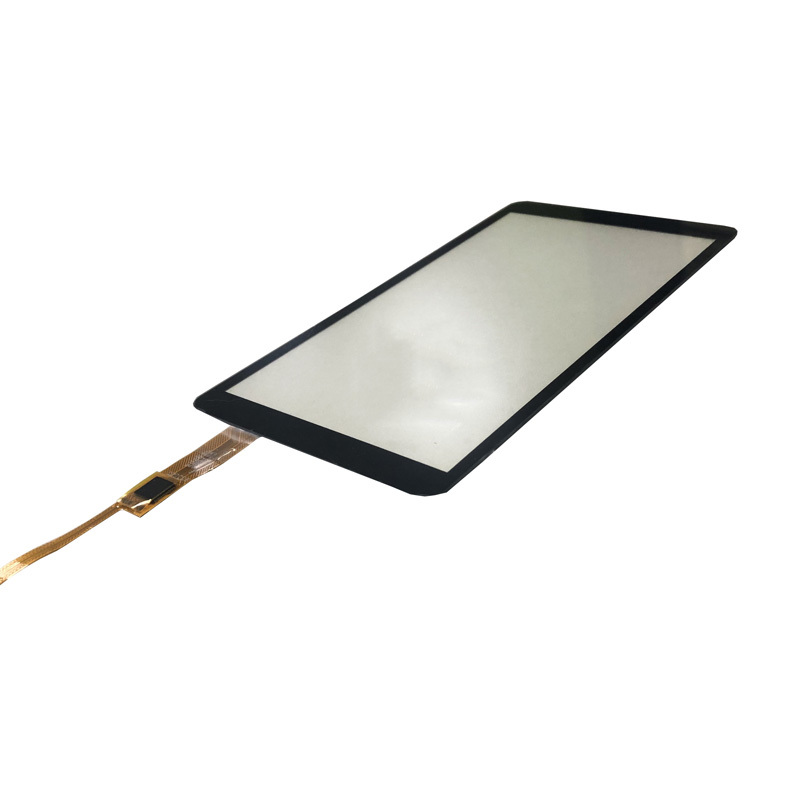
The capacitive touch panel manufacturer tells you that when a finger touches the metal layer, due to the electric field of the human body, a coupling capacitance is formed between the user and the touch screen surface. For high-frequency current, the capacitance is a direct conductor, so the finger sucks a very large amount from the contact point. Small current. This current flows from the electrodes on the four corners of the touch screen, and the current flowing through these four electrodes is proportional to the distance from the finger to the four corners. The controller calculates the position of the touch point by accurately calculating the ratio of these four currents. .
The capacitive touch panel manufacturer tells you that capacitive screens need to realize multi-touch by increasing the electrodes of mutual capacitance. Simply put, the screen is divided into blocks, and a set of mutual capacitance modules are set up in each area to work independently. Therefore, the capacitive screen can independently detect the touch conditions of each area, and after processing, simply realize multi-touch.
Capacitive technology touch panel CTP (Capacity Touch Panel) uses the current induction of the human body to work. The capacitive screen is a four-layer composite glass screen. The inner surface and the interlayer of the glass screen are each coated with a layer of ITO (Nano Indium Tin Metal Oxide). The outermost layer is a protective layer of silica glass with a thickness of only 0.0015mm, and an interlayer ITO coating. As the working surface, four electrodes are drawn from the four corners, and the inner layer of ITO is the screen layer to ensure the working environment.
The capacitive touch panel manufacturer tells you that when the user touches the capacitive screen, due to the electric field of the human body, the user’s finger and the working surface form a coupling capacitor. Because the working surface is connected to a high-frequency signal, the finger absorbs a small current, which is respectively It flows from the electrodes on the four corners of the screen, and theoretically the current flowing through the four electrodes is proportional to the distance from the finger to the four corners. The controller obtains the position by accurately calculating the ratio of the four currents. The capacitive touch panel manufacturer tells you that it can achieve 99% accuracy and have a response speed of less than 3ms.
Featured Articles
The Difference Between IPS and TN Displays
IPS (In-Plane Switching) and TN (Twisted Nematic) are the two most common technologies currently used in liquid crystal displays. Each has its own strengths and weaknesses, and below I will detail the differences between them.
The Next Generation of Displays: Capacitive Touch Panels
Explore the innovative world of capacitive touch panels and how they are revolutionizing the consumer electronics industry. Learn about the benefits, features, and applications of these cutting-edge d
All You Need to Know About Graphic LCD Modules
Explore the world of graphic LCD modules in the consumer electronics industry, specifically in the realm of LCD display modules. Learn about the features, benefits, and applications of graphic LCD mod
Revamp Your Display Experience with Capacitive Touch Panels
Enhance your viewing experience with the latest technology in display panels - capacitive touch screens. Learn how these advanced panels can revolutionize the way you interact with your devices and ta
Microtech
Microtech Technology Company Limited established in 2001,offers professional design and manufacturing services for hundreds types of Liquid Crytal Display modules and Touch Panels-TN,FSTN,TFT,RTP,CTP.


